Most people searching for a Later alternative aren't unhappy with the planner; they're unhappy with the pricing around it. Later's $25 Starter plan caps you at 30 posts per profile per month, extra brands cost $11.25 per social set plus $3.75 per extra user, and escaping the cap means Growth at $50 a month. Add the fact that Later's homepage now leads with its influencer marketing platform rather than scheduling, and plenty of longtime users are wondering whether they're still the customer.
This roundup compares eight tools that can replace Later, honestly, including who each one is not for. For the head-to-head math on caps and add-ons, our full Pallyy vs Later comparison works through the scenarios line by line.
The quick verdict
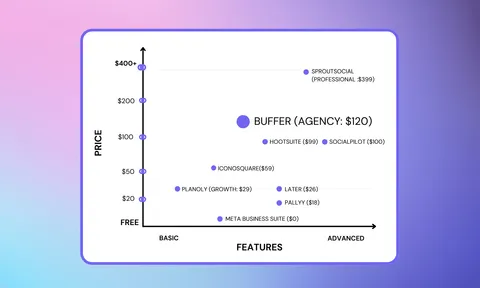
- If you want the visual planner without post caps, and an inbox included, pick Pallyy.
- If you're aesthetic-first and Pinterest-heavy, pick Planoly.
- If you post to one to three channels and want genuinely free, pick Buffer.
- If you need paid and organic reporting in the same tool, pick Metricool.
1. Pallyy

Pallyy is the closest Later replacement for anyone hitting post caps, because its $25 Pro plan covers unlimited posting for a whole brand. A social set includes every profile that brand owns, extra brands are a flat $10 per set, and there's a free plan plus a 14 day trial of every paid feature. The two things Later users worry about losing both survive the switch: Pallyy includes a drag and drop Instagram grid planner, plus a free Instagram feed planner you can try without an account.
What you gain is the management layer Later charges more for. Pallyy's unified inbox pulls comments and DMs from every connected platform into one queue, including Google Business and TikTok comments, and analytics with shareable client reports come with every Pro set rather than sitting on a $110 tier. Agencies get approvals and client access included instead of priced per seat; the whole setup is on our agencies page.
Honestly, Pallyy is not for everyone. There's no UGC collection, no influencer marketplace, and its link in bio tool is simpler than Linkin.bio. If those three features are your workflow, stay on Later. For the full scenario math, see our Pallyy vs Later comparison.
Why choose it: unlimited posting at $25 per brand, with the feed planner, inbox, analytics and approvals included rather than gated by tier.
Watch out for: no UGC tools or influencer marketplace, and a simpler link in bio than Later's Linkin.bio.
2. Planoly
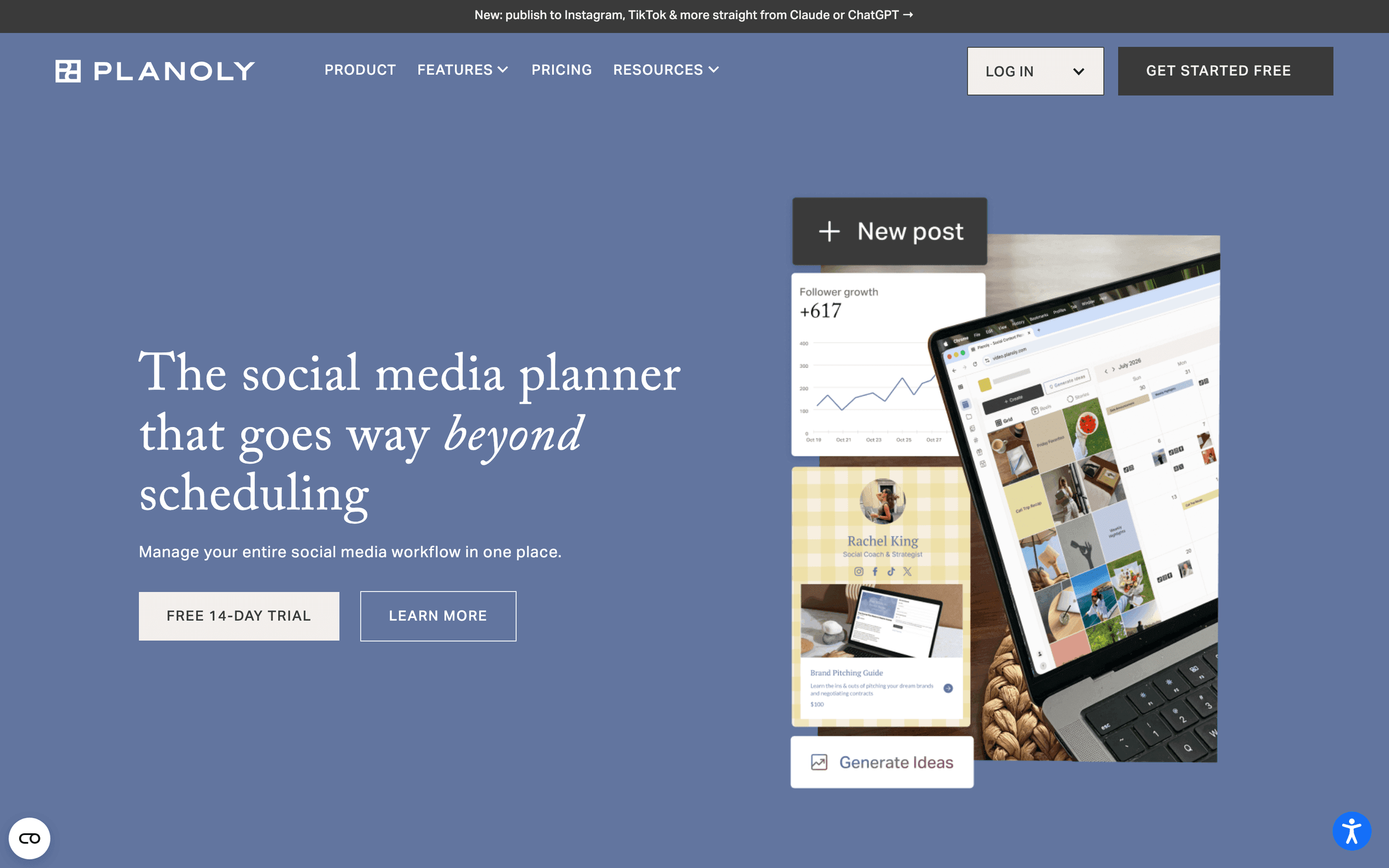
Planoly is the most direct visual substitute for Later, because it helped invent the Instagram grid planner Later is famous for. The drag and drop planning experience is polished, Pinterest is treated as a first-class platform rather than an afterthought, and the creator tools (templates, placeholders, content ideas) suit aesthetic-driven accounts. Starter is $16 per month ($14 on annual), noticeably under Later's $25 entry point.
The catch is that Planoly shares Later's core problem: caps. Starter allows 60 uploads a month, and a brand posting feed content, stories and reels daily blows through it, pushing you to Growth at $28. Extra users and extra social sets are paid add-ons on every plan, there's no inbox, and analytics stay basic. You'd be swapping one capped visual planner for a slightly cheaper capped visual planner.
Why choose it: the nicest pure grid planning experience after Later itself, with genuinely strong Pinterest support, from $16 a month.
Watch out for: the 60 upload monthly cap on Starter and add-on pricing for users and sets; see our full Pallyy vs Planoly comparison.
3. Buffer
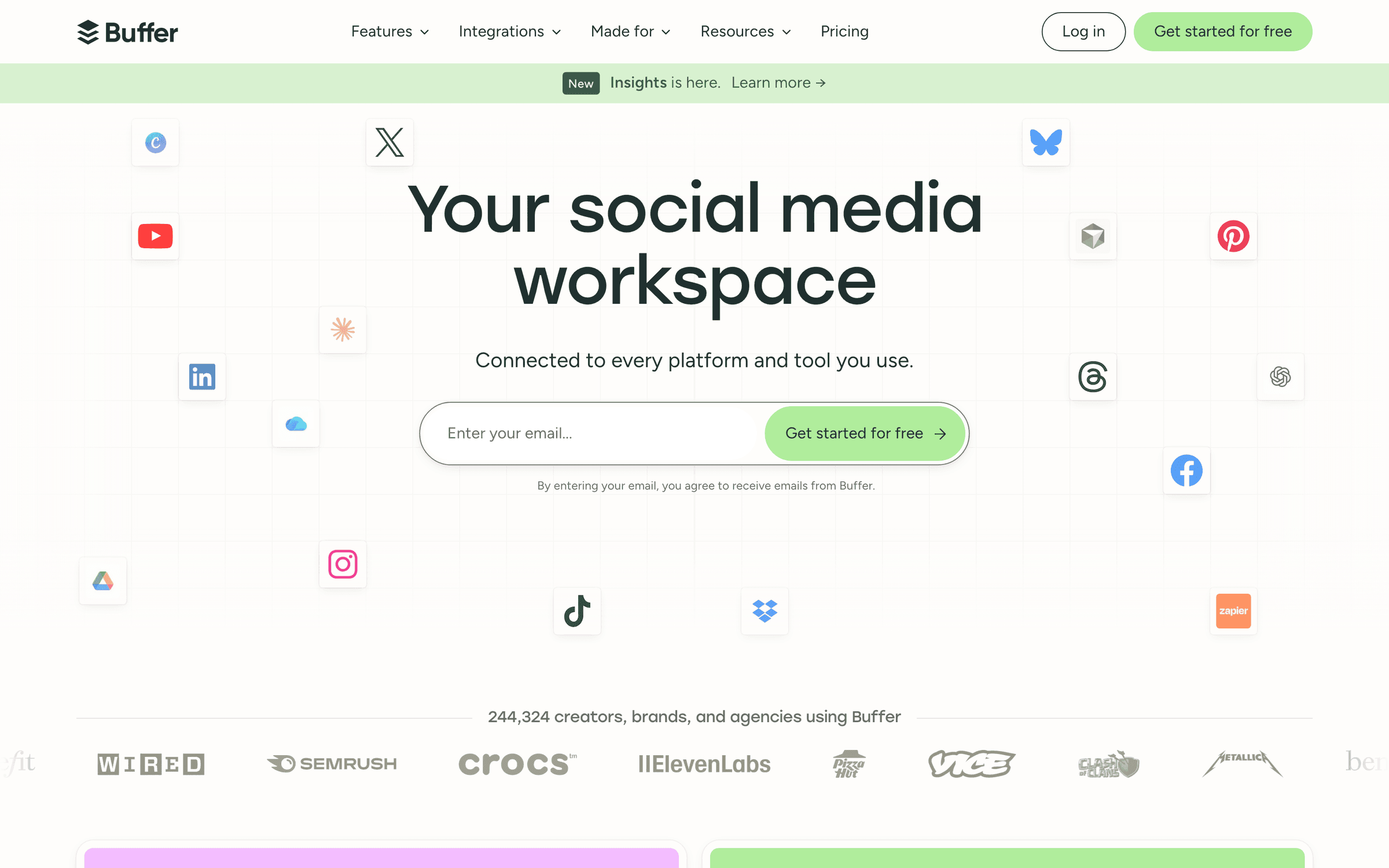
Buffer is the best Later alternative for anyone who wants a genuinely free plan, covering 3 channels with 10 scheduled posts per channel, forever, no card. Its paid pricing works completely differently from Later's: you pay per channel at $6 each on Essentials, not per social set, so a solo creator on three or four networks gets simple, cheap scheduling from one of the most liked tools in the category.
One brand posting to seven networks costs $42 a month on Buffer Essentials with monthly billing. Buffer has a Community inbox for supported comments, but no DM inbox; approval workflows require Team, starting at $12 per channel. It also has an Instagram grid preview, so compare the planning workflow rather than assuming visual previews are exclusive to Later.
Why choose it: the real free plan and maximum simplicity for solo posters on one to three channels.
Watch out for: your total channel cost, including volume discounts, and the Team upgrade for approvals; our Pallyy vs Buffer comparison works the math, and the Buffer alternatives roundup covers the wider field.
4. Metricool
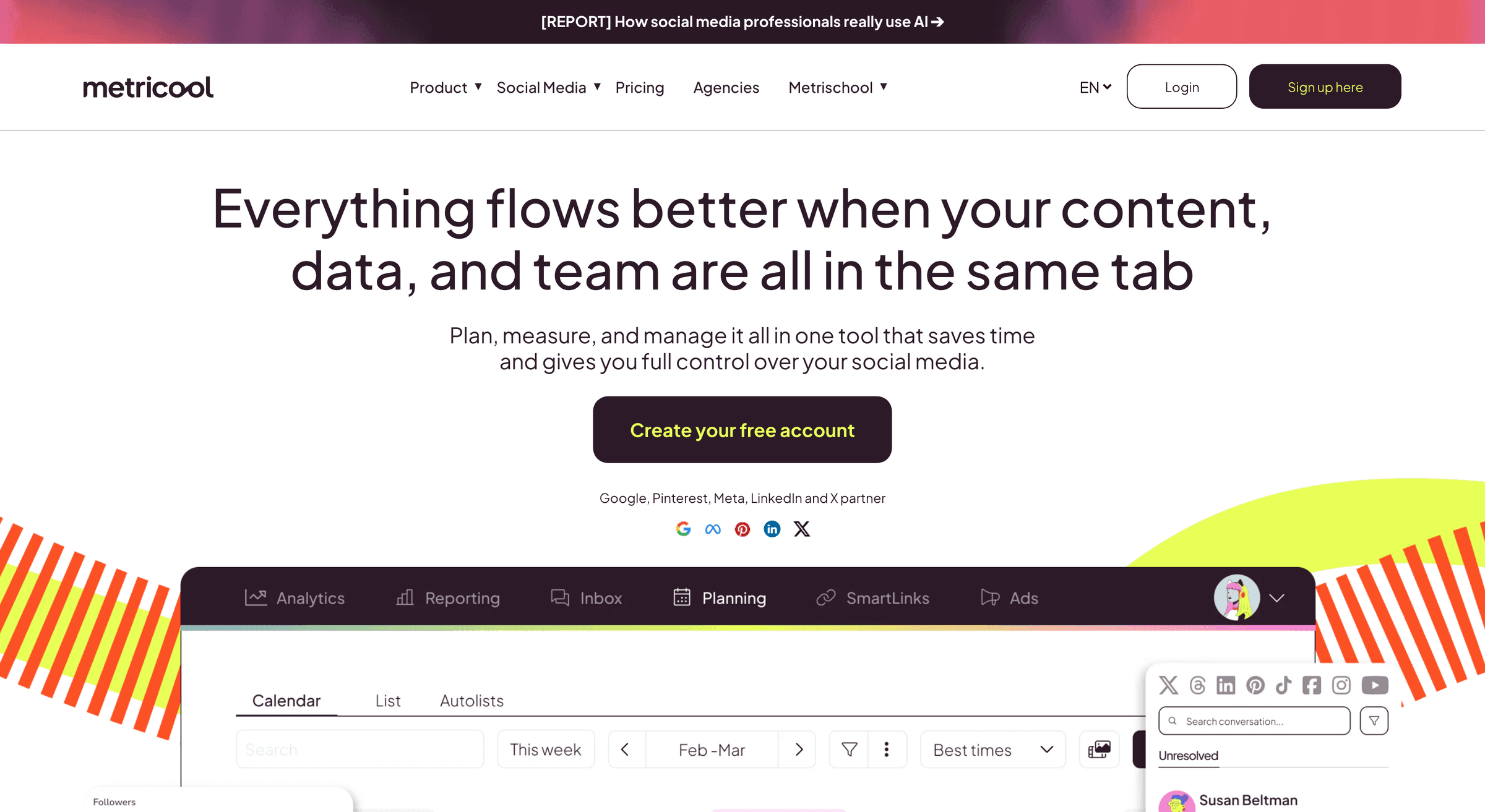
Metricool is the analytics-first alternative, and its free plan covers one brand with real usefulness. It began as a reporting tool and grew scheduling around the data, so it reports on Google, Meta and TikTok ad campaigns alongside organic, and competitor benchmarking is built in. Its Starter multi-brand pricing (around $20 to $25) is aggressive for anyone juggling several low-volume brands.
The fine print sends some people straight back out. Connecting an X account costs about $5 per account per month on every tier, client approvals require the Advanced plan (roughly $43 to $67), and listed prices exclude VAT where it applies. As a Later replacement specifically, its visual planning is functional rather than beautiful; you're choosing it for the data, not the grid.
Why choose it: ads reporting and competitor tracking in the same tool as your scheduler, with a real free plan.
Watch out for: the $5 monthly surcharge per X account and approvals gated behind Advanced; details in our Pallyy vs Metricool comparison.
5. SocialBee
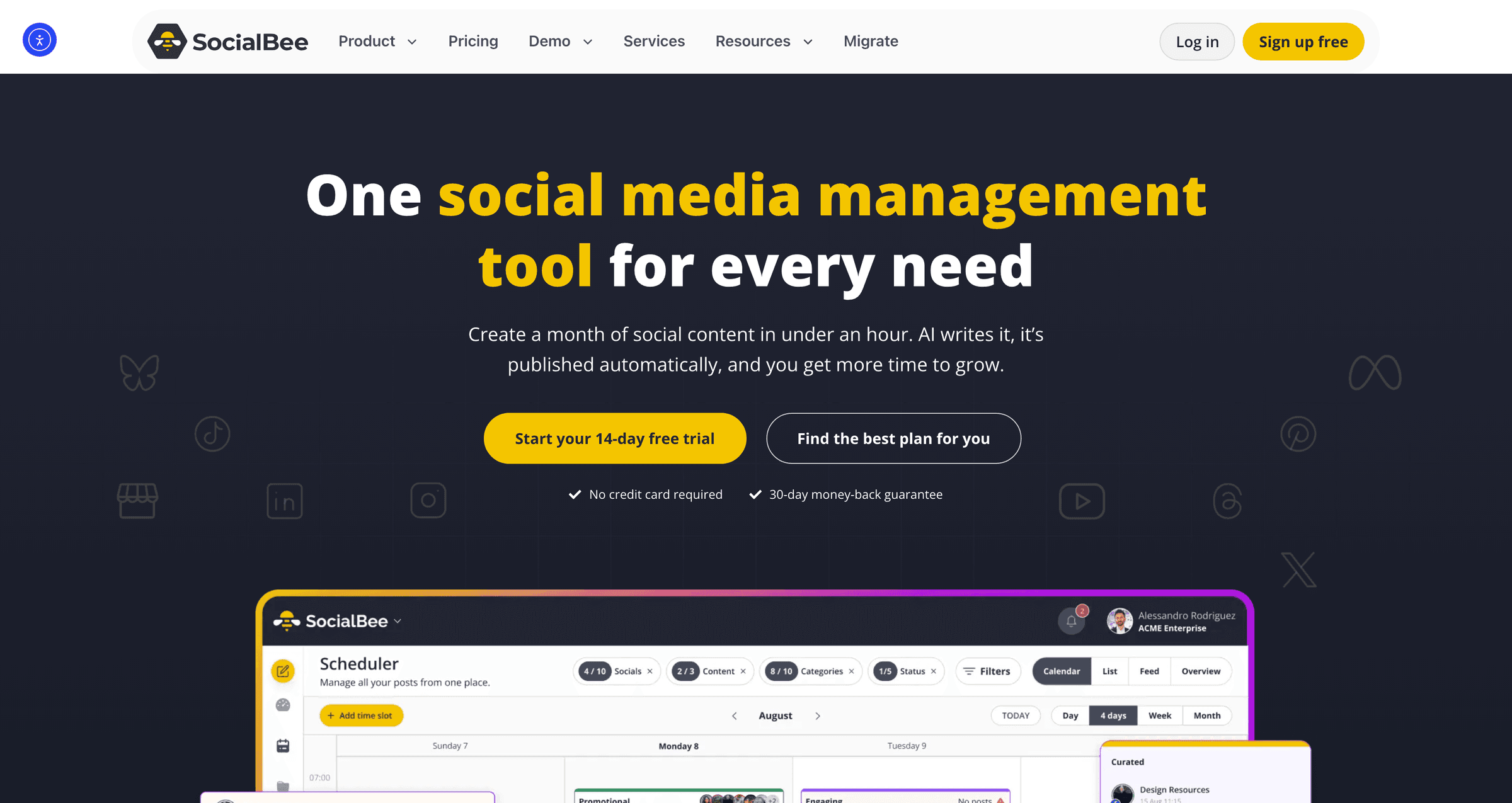
SocialBee is the specialist pick for evergreen content recycling, which is a strategy Later doesn't really serve. You organize content into categories, queue the categories, and let evergreen posts recycle forever. For consultants, coaches and SaaS accounts with deep archives, nothing else on the market does it as well. Bootstrap starts at $29 per month.
It's a narrow tool outside that specialty. Bootstrap and Accelerate ($49) are single-user plans, so the first teammate or client with access requires Pro at $99 or a $10 monthly per-user add-on. Bootstrap keeps only 3 months of analytics history, there's no inbox, and extra profiles come in $15 five-packs. Visual Instagram planning is not its strength either.
Why choose it: best-in-class evergreen recycling queues that keep a solo account posting on autopilot.
Watch out for: single-user plans until $99 and just 3 months of analytics on Bootstrap; see our full Pallyy vs SocialBee comparison.
6. Vista Social
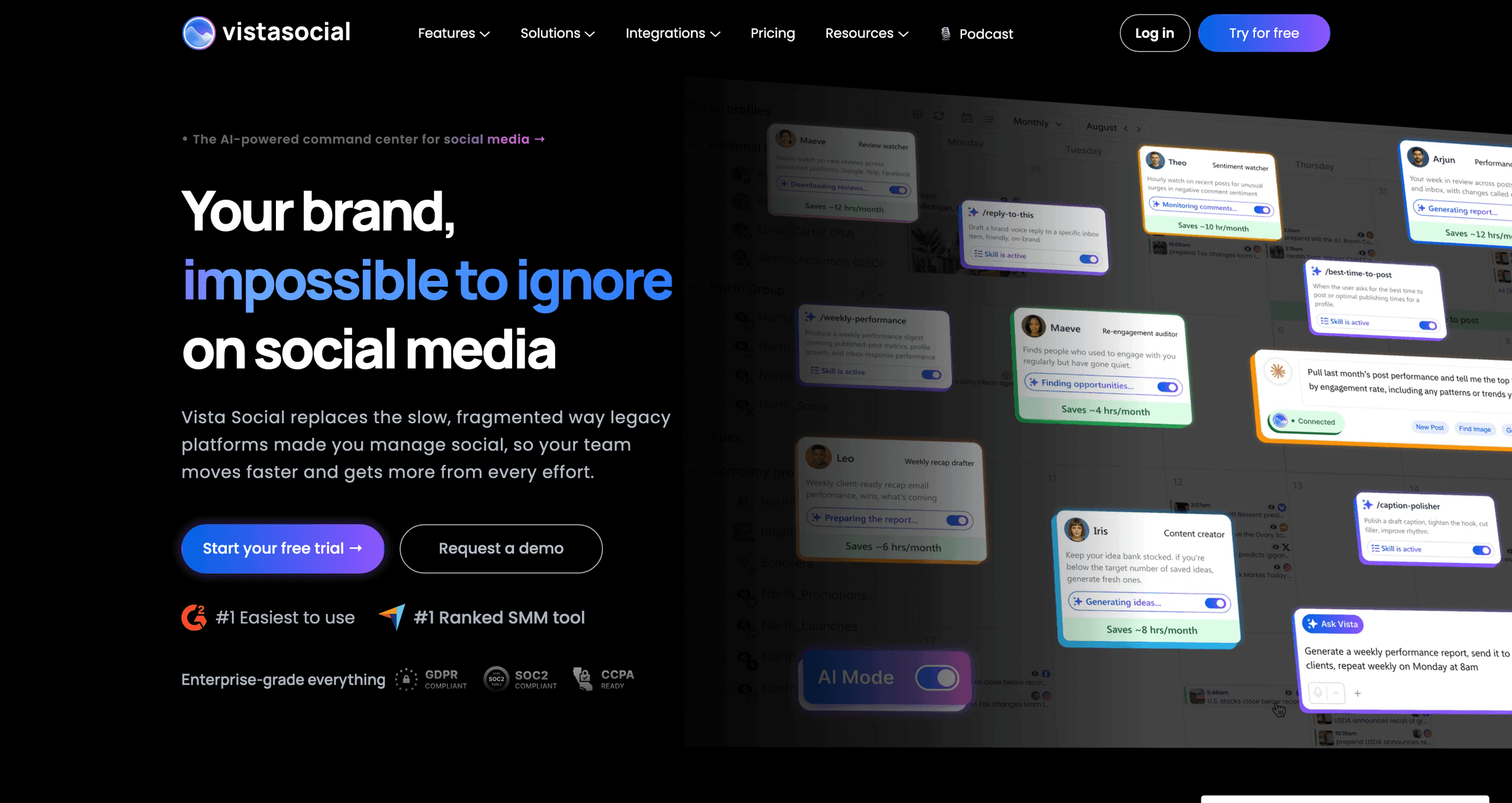
Vista Social offers the widest feature set on this list, but its entry price starts at $79 per month for five profiles. Scheduling, unified inbox, listening, reviews management and DM automations all live in one product, features ship fast, and its reviews management is stronger than most competitors. The tiers above run $149 and $379.
That pricing is the problem for most Later refugees. If Later's $25 with add-ons felt expensive, tripling it to escape post caps rarely makes sense. Vista Social's pricing works at genuine agency scale, where per-profile bundle costs drop; at solo and small-team scale you're paying for automation and listening surfaces you may never open.
Why choose it: the closest thing to an all-in-one suite below true enterprise pricing, with strong reviews management.
Watch out for: the $79 entry point, which prices out the creators and freelancers Later serves; our Pallyy vs Vista Social comparison covers the gap.
7. Hootsuite
Hootsuite is the enterprise answer, with plans starting around $99 per user per month billed annually. That buys social listening across the public web, compliance and governance features, approval hierarchies, and a vendor that passes procurement reviews. For organizations where legal reviews tweets, it's the category leader alongside Sprout Social.
For a typical Later user it's the wrong direction entirely. The billing is annual only, making the real entry commitment roughly $1,188 up front for one seat, and Team plans run $199 to $249 per month. You'd be trading a capped $25 visual planner for enterprise software, and the visual planning culture Later users love isn't what Hootsuite is built around.
Why choose it: enterprise listening, compliance and governance when those are hard requirements.
Watch out for: around $99 per user per month with annual-only billing; our Pallyy vs Hootsuite comparison covers who actually needs it.
Weighing up the whole enterprise-exit market? Our Hootsuite alternatives roundup compares eight options at every budget.
8. Publer
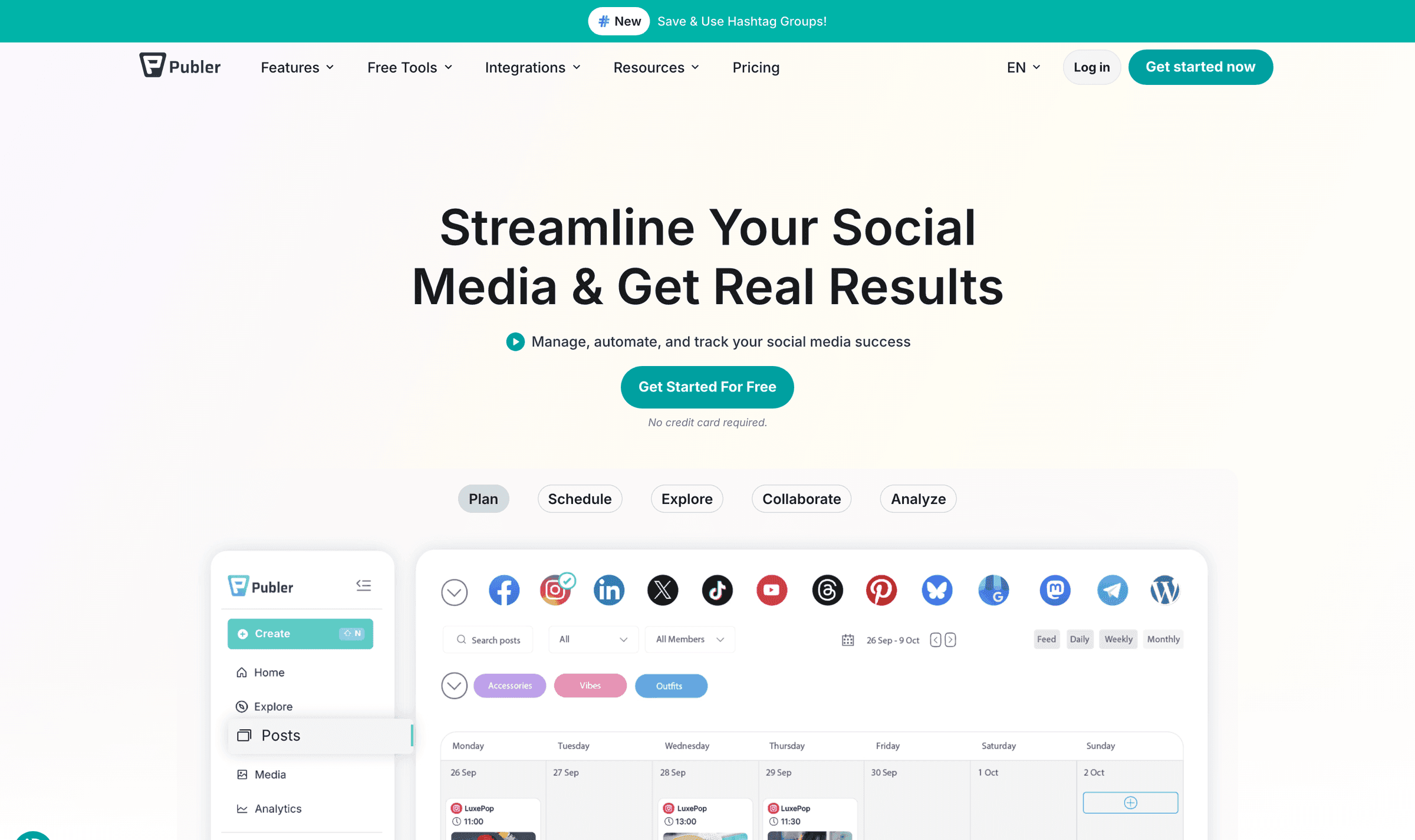
Publer is the budget wildcard, a scheduler known for bulk scheduling and covering a lot of networks at a low price point. It has built a following among solo marketers who want workhorse features (bulk upload via CSV, recycling, watermarking) without paying for polish, and it iterates quickly on new platform support.
Its trade-offs are the classic budget-tool ones: the interface is denser and less refined than Later's, and the engagement and reporting layers are thinner than the tools higher on this list. Check current plans on its site before committing; the honest positioning is "a lot of scheduler for the money, and scheduling is most of what you get."
Why choose it: bulk scheduling and utility features at a budget price for solo marketers who value function over polish.
Watch out for: a busier interface and thinner inbox and analytics than the all-in-one tools above.
How to choose
- By team size: solo creators do fine on Buffer, Publer or Planoly; the moment teammates or clients need access, per-brand tools like Pallyy beat per-seat and per-user add-on pricing.
- By budget shape: flat per-brand pricing (Pallyy) suits frequent posters; per-channel (Buffer) suits minimalists; capped plans (Later, Planoly) only suit light posters who never hit the ceiling.
- By must-have feature: evergreen recycling means SocialBee, ads reporting means Metricool, listening means Hootsuite, and a visual planner plus inbox in one bill means Pallyy.
Later alternatives FAQ
What is the best free alternative to Later?
Pallyy, Buffer and Metricool all have real free plans, which Later doesn't. Buffer's free plan covers 3 channels with 10 scheduled posts each, Metricool's covers one brand, and Pallyy's free plan comes with a 14 day trial of every paid feature, so you can test all three without a card.
Is Later worth it in 2026?
Later is worth it if you're an Instagram-first creator who posts under 30 times per profile a month and uses Linkin.bio or UGC collection. If you post daily or manage multiple brands, the caps and per-set add-ons make alternatives like Pallyy cheaper for more features.
How much does Later cost?
Later's Starter plan is $25 per month for one social set, capped at 30 posts per profile per month. Growth removes the pressure at $50, Scale is $110, and extra social sets cost $11.25 per month plus $3.75 per extra user.
Which Later alternative has no post limits?
Pallyy has no post caps on any paid plan. A $25 Pro social set covers unlimited posting to every profile a brand owns, which is the single biggest structural difference from Later's cap-based pricing.
Whichever way you lean, the cheapest way to decide is a week of real posting in two tools side by side, since most of them have free plans or trials. For the wider market view beyond these eight, our social media scheduling tools comparison covers the full field, and every head-to-head matchup lives on the compare page.
![Preview for article Tips for Social Media Managers [Improve Your Productivity]](/_ipx/w_480&f_webp&q_80/img/blog/tips-for-social-media-managers/main.jpg)