Every social media scheduler promises the same thing: plan your content ahead, publish automatically, get your evenings back. But once you actually manage real accounts with one, juggling clients, approvals, formats and five different platforms, the differences show up fast.
This list covers where each tool fits best, what it costs, where it falls short, and who should pick it. Pallyy is first because we believe in it, but every entry includes the reasons you might choose it instead of us.
The best social media scheduling tools at a glance
| Tool | Best for | Starting paid price (USD) | Free option | Approval availability |
|---|---|---|---|---|
| Pallyy | Agencies and freelancers | $25/month, 1 social set | 15 posts/month | Pro and above; no-login client links |
| Buffer | Individuals starting out | $5/channel/month, annual billing | 3 channels, 10 queued posts each | Team plan |
| Later | Instagram-first creators | $18.75/month, annual billing | 14-day trial | Growth and Scale |
| Planable | Multi-stakeholder approvals | $39/workspace/month | 50 posts total | Required on Pro; multi-level on Enterprise |
| Metricool | Analytics-minded solo marketers | $25/month | 1 brand, 20 posts/month | Advanced and above |
| SocialBee | Evergreen content recycling | $29/month | 14-day trial | Accelerate and above |
| Sendible | White-label agency workflows | Check current plans | 14-day trial | Plus and above |
| SocialPilot | Bulk scheduling on a budget | $20/month | 14-day trial | Higher tiers |
| Agorapulse | Combined inbox and scheduling | $79/user/month, annual billing | Limited free plan | Higher tiers |
| Hootsuite | Enterprise teams | $99/user/month, annual billing | 30-day trial | Plan-dependent |
| Sprout Social | Premium analytics and listening | $199/seat/month, annual billing | 30-day trial | Plan-dependent |
| Vista Social | Publishing and community management | $99/month | 14-day trial | Plan-dependent |
Prices were checked against the vendors' public pricing pages on 19 October 2026. Amounts are in USD before tax, billed monthly unless annual billing is stated. Each review links to its pricing source. Check Sendible's pricing page for current workspace rates and white-label add-ons. Entry prices do not necessarily include approvals, listening or every feature discussed below.
How we chose these tools
We make Pallyy, so this is a vendor-written comparison. Pallyy appears first because client scheduling is the workflow we build for; the order is not a scored ranking.
We compare each tool's publishing workflow, collaboration features, pricing model and plan limits. Use these recommendations to shortlist tools for your own trial. The links are not affiliate links, and every review includes a reason to consider another option.
1. Pallyy: best for agencies and freelancers
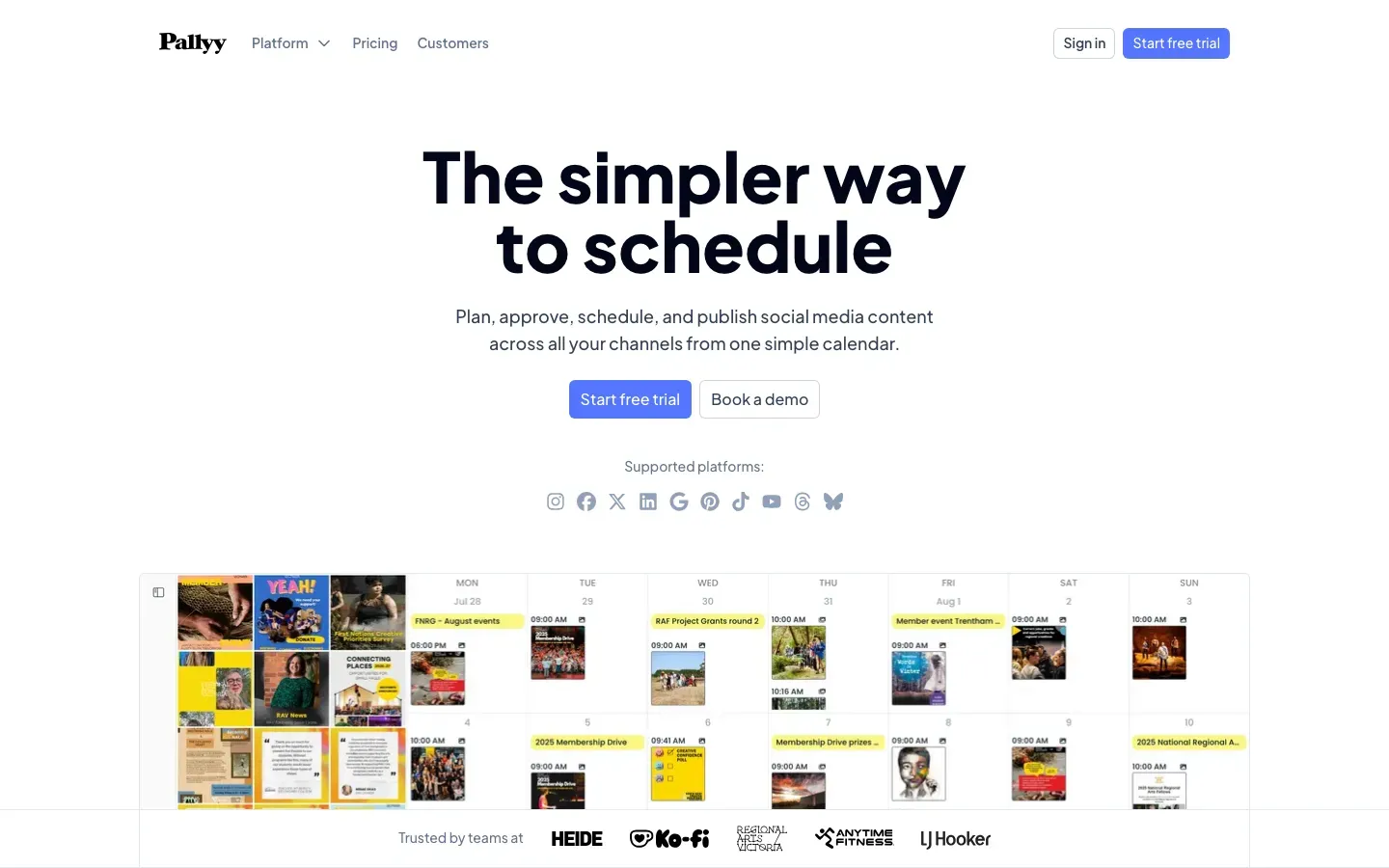
Pallyy is built around one idea: the calendar is the product. Planning, feedback, approvals and publishing happen on one visual social media calendar that covers Instagram, Facebook, LinkedIn, TikTok, Pinterest, Google Business, YouTube, X, Threads and Bluesky.
Where it pulls ahead for agencies is the client workflow. You can share a calendar with a client through a simple link, no account needed on their side, and they can comment, request changes and approve posts right there. Approved content publishes automatically at its scheduled time. Paid plans also offer a shared inbox and analytics, with custom client reports on Agency and Scale. A social set groups one brand's connected profiles; plans bundle these sets with a fixed number of team users. The social media scheduler for agencies page walks through that setup.
It also has an MCP server on every plan, so you can schedule social media posts with MCP from Claude, ChatGPT or Cursor without opening the app. Several tools on this list now have one, compared in social media MCP servers.
Pros
- Client approvals through a shared link, with no client login and automatic publishing once approved
- One visual calendar across ten platforms, with the media library, inbox and reports beside it
- Agency includes 10 social sets and 3 users, with additional sets and users available for $10/month each
- A free plan for light image publishing, plus a 14-day trial of paid plans
Cons
- No social listening, so brand monitoring beyond your own mentions needs another tool
- No enterprise SSO or compliance tooling
- Free is limited to 15 image posts per month; approvals and video publishing need a paid plan
- Pro includes one user and cannot add teammates; team access starts on Agency
Pricing: The Pallyy plans start at $25/month for Pro with 1 social set and 1 user, or $99/month for Agency with 10 sets and 3 users. Extra Pro sets cost $10/month. The 14-day paid-plan trial requires card details; the free plan does not.
Pick something else if: you need deep social listening or enterprise SSO. That is Sprout and Hootsuite territory.
2. Buffer: best for individuals starting out
For a full side-by-side, see our Pallyy vs Buffer comparison, or widen the shortlist with our Buffer alternatives roundup.
Buffer is a straightforward starting point for queue-based scheduling. Connect a few channels, fill your queue, and posts go out at your preset times. The free plan, 3 channels with 10 scheduled posts each, is useful, and the per-channel pricing scales gently for someone adding one network at a time.
Buffer also supports teams: its Team plan includes unlimited users and approval workflows. The cost depends on your channel count, so compare the total for all your brands before choosing it.
Pros
- A simple queue-based workflow for regular posting
- A free plan that is enough for one person on three channels
- Unlimited team members on the Team plan
- Per-channel pricing is cheap at one or two channels
Cons
- Per-channel pricing gets expensive for a multi-platform brand, and more so for several brands
- Approvals require the Team plan
- Essentials is limited to one user
Pricing: Buffer Essentials starts at $5/channel/month billed annually. Team starts at $10/channel/month on annual billing. Volume discounts apply above 10 channels.
Pick something else if: a bundle of profiles works out cheaper for your client roster, or you need a more complex approval chain.
3. Later: best for Instagram-first creators

We break down the pricing differences in our Later alternative comparison.
Later grew up as an Instagram tool and it shows, in a good way. The visual grid planner, drag-and-drop media library and link-in-bio tool make it the natural pick for brands whose entire strategy revolves around how the feed looks. TikTok and Pinterest support is strong too.
Check the tier before buying: Starter has one user and 30 posts per profile per month. Growth adds approvals and external feedback, while Scale removes the post cap.
Pros
- Visual planning for checking your Instagram feed before publishing
- Strong TikTok and Pinterest support alongside Instagram
- Link-in-bio and user-generated content tools built in
- A friendly interface for creators who are not marketers by trade
Cons
- Starter and Growth cap posts per profile; unlimited posting requires Scale
- Approvals and shared calendars require Growth or Scale
- X is not among the currently listed supported networks
Pricing: Later Starter is $18.75/month billed annually, with a 14-day trial.
Pick something else if: you need X publishing or approvals on the lowest-cost plan.
Comparing visual planners specifically? Our Later alternatives roundup ranks eight of them side by side.
4. Planable: best for multi-stakeholder approvals
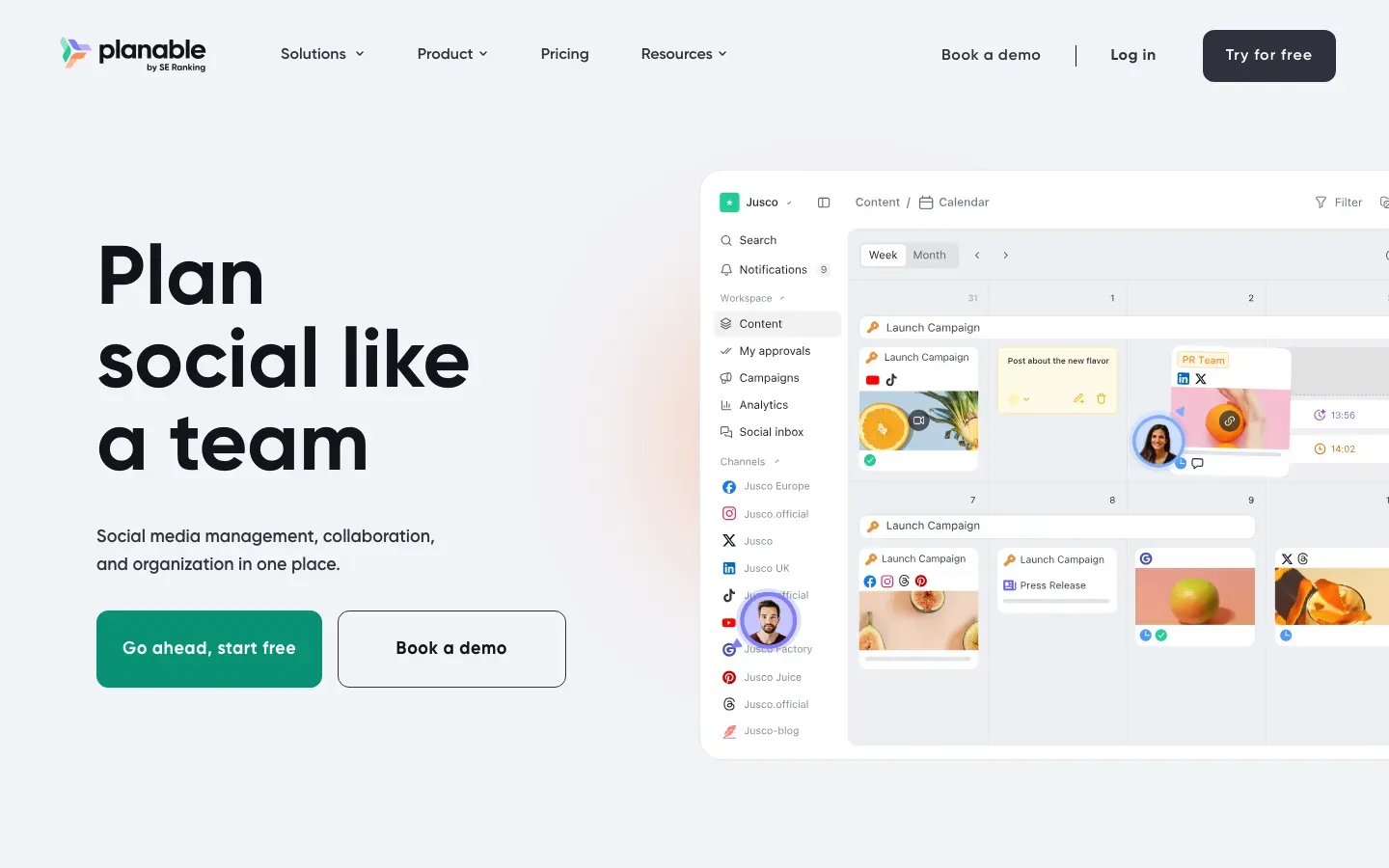
Planable is what happens when you design a tool entirely around the review process. Content sits in a feed-like preview, teammates and clients comment in context, and posts move through customisable approval layers before anything publishes. For teams where legal, brand and client all need to sign off, it is excellent.
The trade-off is the plan structure. Users are unlimited, but each workspace has page and post limits. Analytics and inbox features are paid add-ons on the self-serve plans.
Pros
- Multi-level approval workflows on Enterprise for sequential sign-off
- Comments and feedback attached to the post preview, so nothing gets lost in email
- Previews that look like the live network, which clients find easy to judge
- Free for your first 50 posts, enough to trial the workflow properly
Cons
- Basic allows 60 posts and 4 social pages per workspace
- Required approvals need Pro; multi-level approvals need Enterprise
- Analytics and inbox add-ons increase the per-workspace cost
Pricing: Planable Basic is $39/workspace/month with unlimited users. The 50 free posts are a one-time allowance, not a monthly quota.
Pick something else if: you need reporting and an inbox included in the base price, or high posting volume across many workspaces.
5. Metricool: best for analytics-minded solo marketers
See how it stacks up against Pallyy in our Metricool alternative comparison.
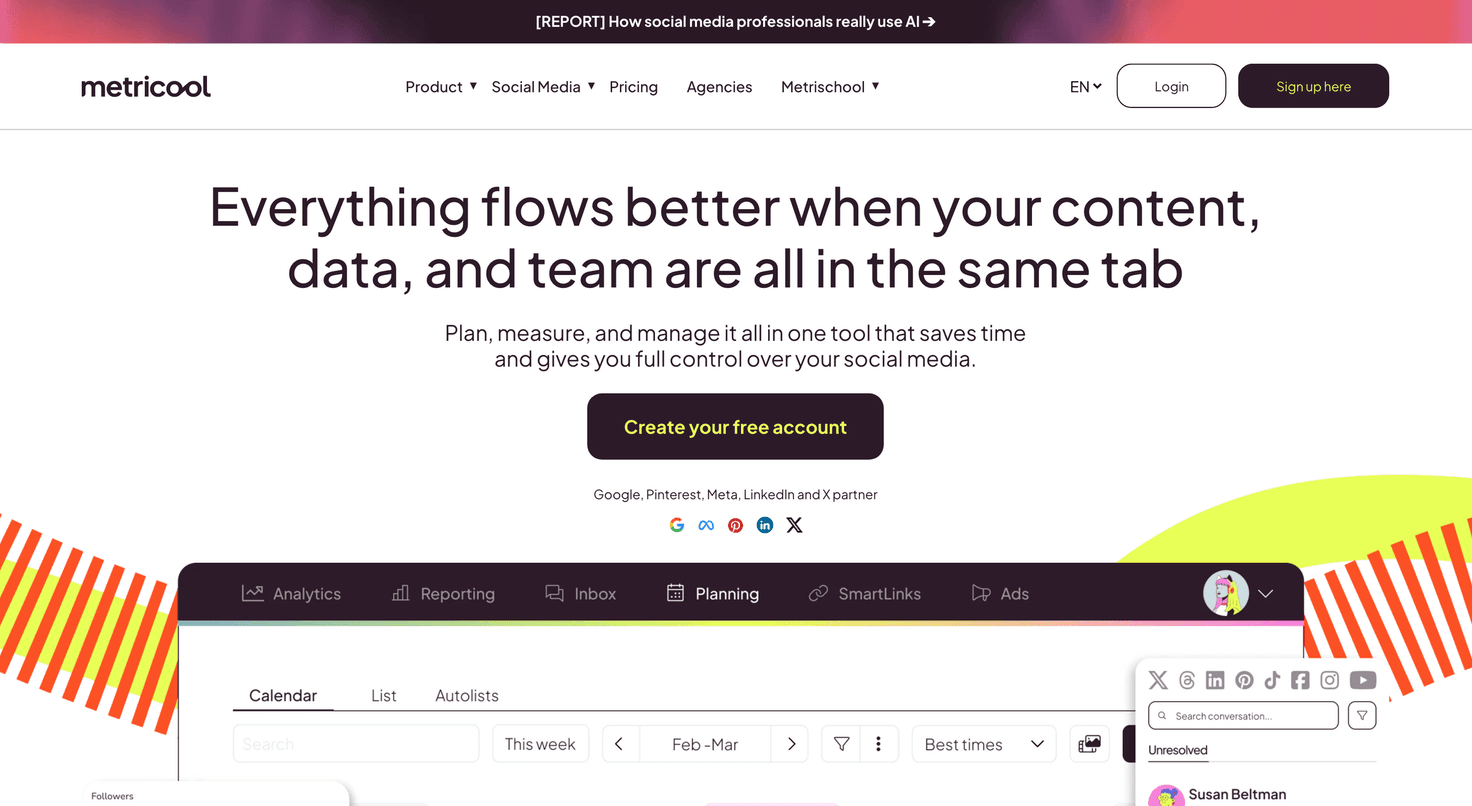
Metricool brings competitor tracking, ad account data and web traffic together with social metrics and scheduling. It is a useful option for a solo marketer who spends as much time reporting on content as planning it.
It is worth considering when reporting is central to your work. Teams needing roles and approvals should budget for Advanced rather than the entry plan.
Pros
- Reporting that covers organic, paid and web traffic in one place
- Competitor tracking at a price point where most tools offer none
- A free plan for one brand with 20 posts per month
- Scheduling support for Google Business Profile and Pinterest alongside other networks
Cons
- A dense interface with a learning curve for people who only want to schedule
- Roles and approvals require Advanced or above
- X is an add-on rather than included
Pricing: Metricool Starter starts at $25/month, with brand allowances varying by tier. Free excludes LinkedIn and X; X requires an add-on on paid plans.
Pick something else if: you only need a simple posting queue or want approvals on an entry plan.
6. SocialBee: best for evergreen content recycling
Our SocialBee alternative page covers the differences in detail.
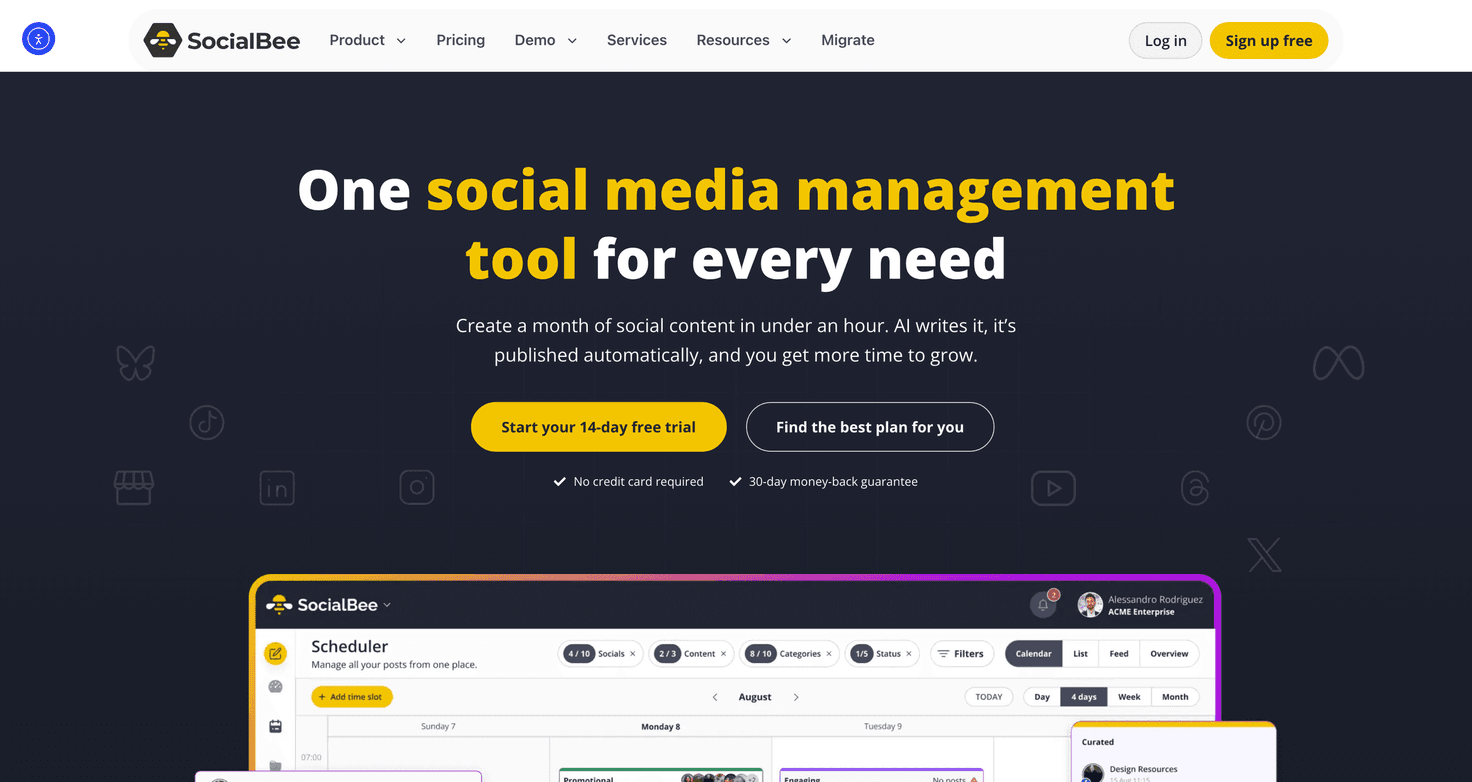
SocialBee's category-based queues are its superpower. You organise content into categories such as tips, promotions and curated links, then set a posting mix and recycle evergreen posts. For consultants and personal brands with a deep back-catalogue, it is a huge time-saver.
If your content is mostly timely or client-specific, recycling matters less and the category system becomes overhead.
Pros
- Category queues and automatic recycling keep a calendar full with little upkeep
- Good for personal brands and consultants with evergreen material
- AI copy assistance and content curation built in
- Reasonable entry price for a single user
Cons
- The category system is overhead for timely or client-specific content
- One user and a short analytics history on the entry plan
- No free plan, only a trial
Pricing: SocialBee Bootstrap is $29/month for 5 profiles and 1 user, with a 14-day trial. Approvals start on Accelerate.
Pick something else if: your posts are time-sensitive, or several people need to work in the account.
7. Sendible: best white-label for larger agencies
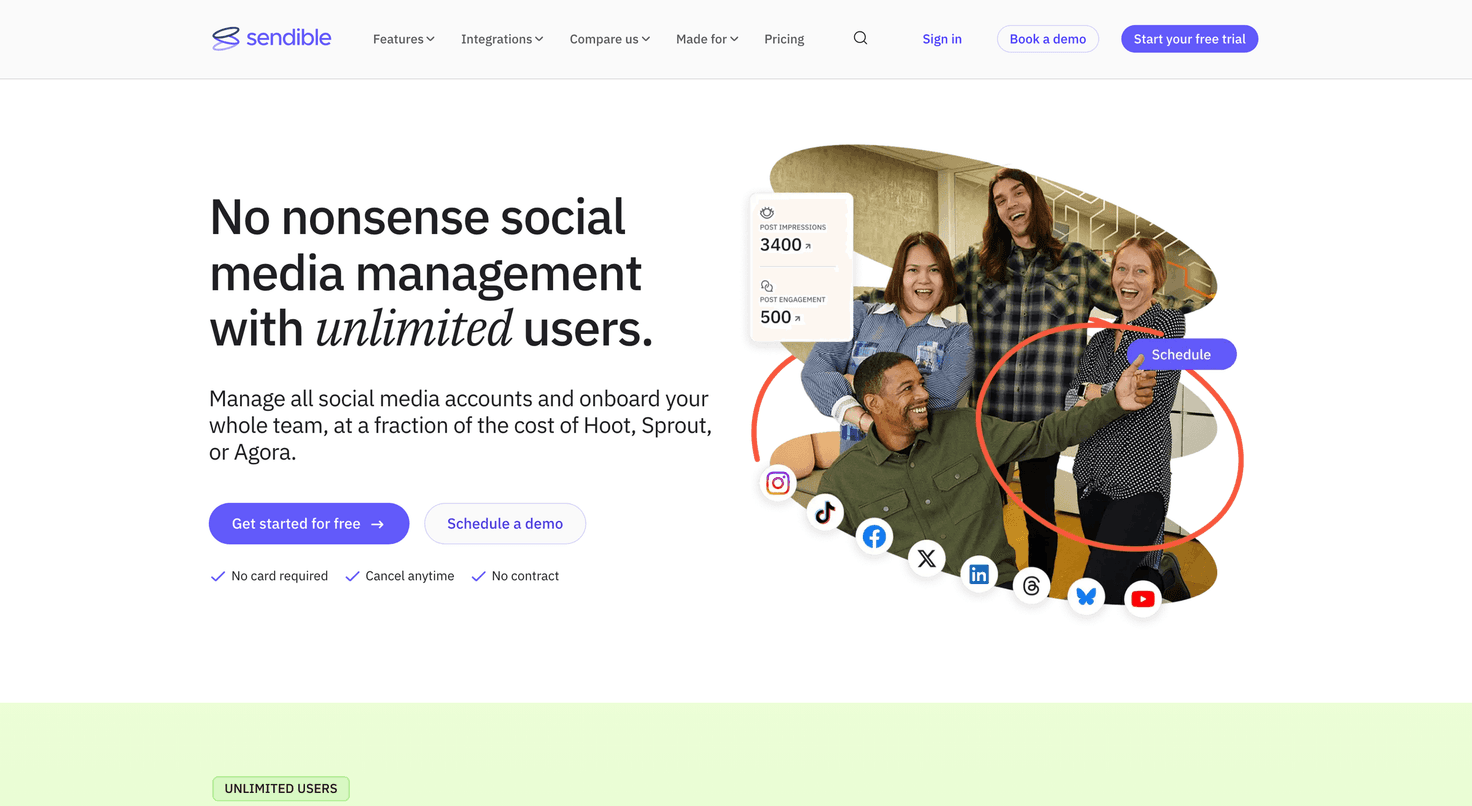
Sendible is aimed squarely at agencies that want to put their own brand on the tool. The white-label option lets you present a custom-branded dashboard to clients, and per-client dashboards, approval workflows and report builders round out the agency feature set.
Its current plans include unlimited users and bundle workspaces, each with six profiles. White labelling is an add-on on Elite and Enterprise.
Pros
- Proper white-labelling, with your branding on the dashboard and reports
- Per-client dashboards, approvals and a report builder in one tool
- Priority inbox and content suggestions for busy account managers
- Scales to large client rosters
Cons
- More clients or profiles mean more workspaces to budget for
- More complex to set up and administer than the smaller tools
- White labelling is a paid add-on on Elite and Enterprise
Pricing: Sendible's current plans run from Core to Enterprise, with unlimited users. Check the vendor page for your workspace total and a white-label quote. A 14-day trial is available.
Pick something else if: you only need basic scheduling and will not use the client-management features.
8. SocialPilot: best budget pick for bulk scheduling
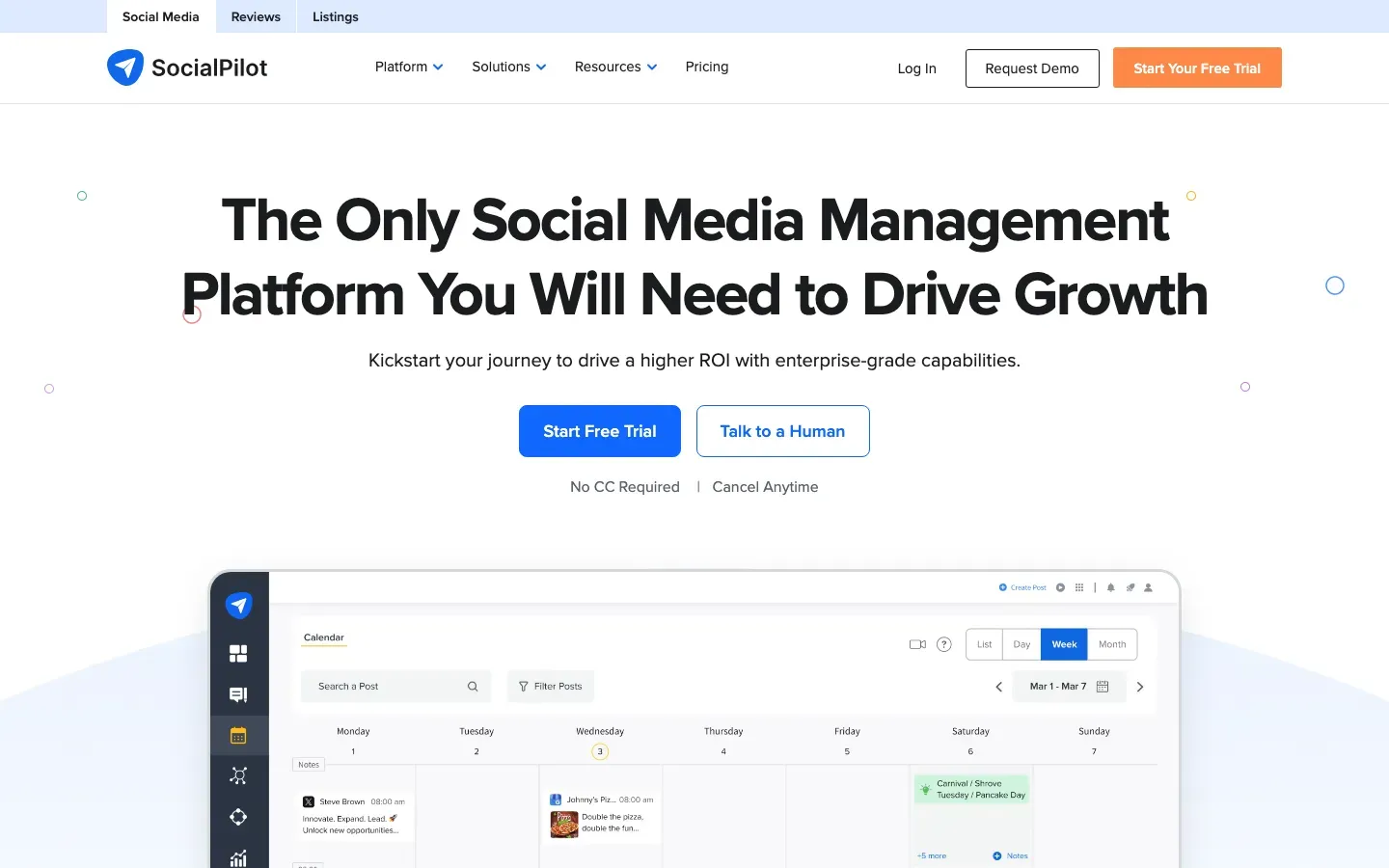
SocialPilot packs a lot of accounts into a low price, which makes it popular with agencies managing volume on a budget. Bulk scheduling by CSV import of hundreds of posts, client management and white-label reports all show up at price points below the big names.
Compare the plan that includes your actual workflow: the entry tier is for one user, while client approvals and more advanced reporting sit higher up.
Pros
- Five accounts on the entry plan for a solo operator
- Bulk scheduling from a spreadsheet for high-volume calendars
- Client management and white-label reports at a budget price
- Approval workflows available on higher tiers
Cons
- The entry plan includes only one user
- Advanced reporting needs a higher tier
- Client collaboration costs more than the advertised entry price
Pricing: SocialPilot Essentials is $20/month, or $17/month billed annually, for 5 accounts and 1 user. There is a 14-day trial.
Pick something else if: bulk scheduling is less important than a detailed review workflow or specialist analytics.
9. Agorapulse: best combined inbox and scheduling
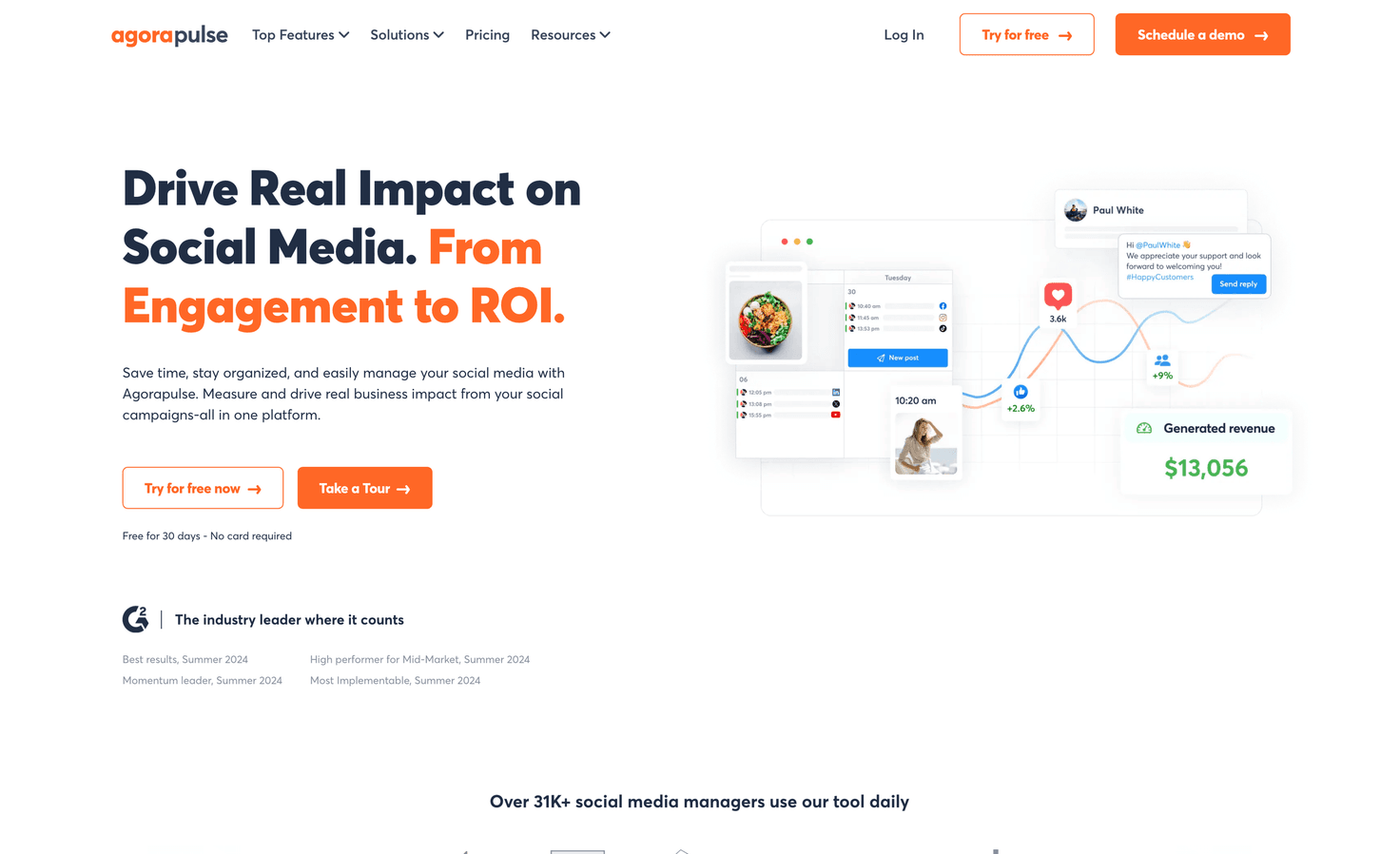
Agorapulse treats the social inbox as seriously as the scheduler. Comments, DMs, mentions and reviews land in one unified inbox with assignment and labels, next to a solid publishing calendar with queues and approvals. For brands where community management is half the job, that combination is the draw.
Per-user pricing puts it in mid-market territory. Small teams may find the same core workflow cheaper elsewhere.
Pros
- An inbox with assignment, labels and saved replies
- A capable publishing calendar with queues and approvals beside it
- Solid reporting, including response-time metrics for support teams
- Reliable platform support and a mature product
Cons
- Per-user pricing, so a team of five pays five times
- Expensive for a team that only needs scheduling
- The free plan is limited
Pricing: Agorapulse Standard starts at $79/user/month billed annually or $99 billed monthly. A limited free plan and 30-day trial are available.
Pick something else if: the inbox is not central to your work, or you are a small team watching the monthly bill.
10. Hootsuite: best for enterprise teams
Hootsuite offers a broad suite for larger teams: team permissions, approval chains, social listening add-ons, paid ads integration and the compliance features big organisations require. If you are coordinating a large team across many regions and brands, Hootsuite has answers most tools do not. For the full cost breakdown, see our Pallyy vs Hootsuite comparison.
It also has plans for smaller teams, but the cost is harder to justify if you only need scheduling.
Pros
- Team permissions, approval chains and compliance features built for large organisations
- Social listening and paid ads integration available in the same suite
- Broad platform support and a long track record
- Enterprise support for larger deployments
Cons
- Around $99 per user per month on annual billing, with no free plan
- A dense interface that takes training to use well
- Advanced workflows can require a higher tier than the entry price suggests
Pricing: Hootsuite Standard starts at $99/user/month billed annually. There is no free plan; a 30-day trial is available.
Pick something else if: you mainly need a calendar and basic approvals. Teams weighing an exit from enterprise pricing can see the full field in our Hootsuite alternatives roundup.
11. Sprout Social: best premium analytics and listening
Sprout Social combines publishing with reporting, audience data and customer care workflows. It is a useful shortlist option for teams that need to demonstrate results across departments and manage customer conversations alongside content.
The price reflects all of that: per-seat costs that can reach thousands per year per user. It is the right tool for a very specific budget.
Pros
- Presentation-ready reporting for stakeholders
- Social listening available as a paid add-on
- Customer care workflows alongside publishing
- A polished scheduler that is a pleasure to use
Cons
- The $199 entry price requires annual billing, with no free plan
- Seat-based pricing makes a growing team expensive fast
- Listening and premium analytics can add to the subscription cost
Pricing: Sprout Social Standard starts at $199/seat/month billed annually, with a 30-day trial. Budget separately for listening and premium analytics.
Pick something else if: you mainly need affordable scheduling and basic reports.
12. Vista Social: best for publishing and community management
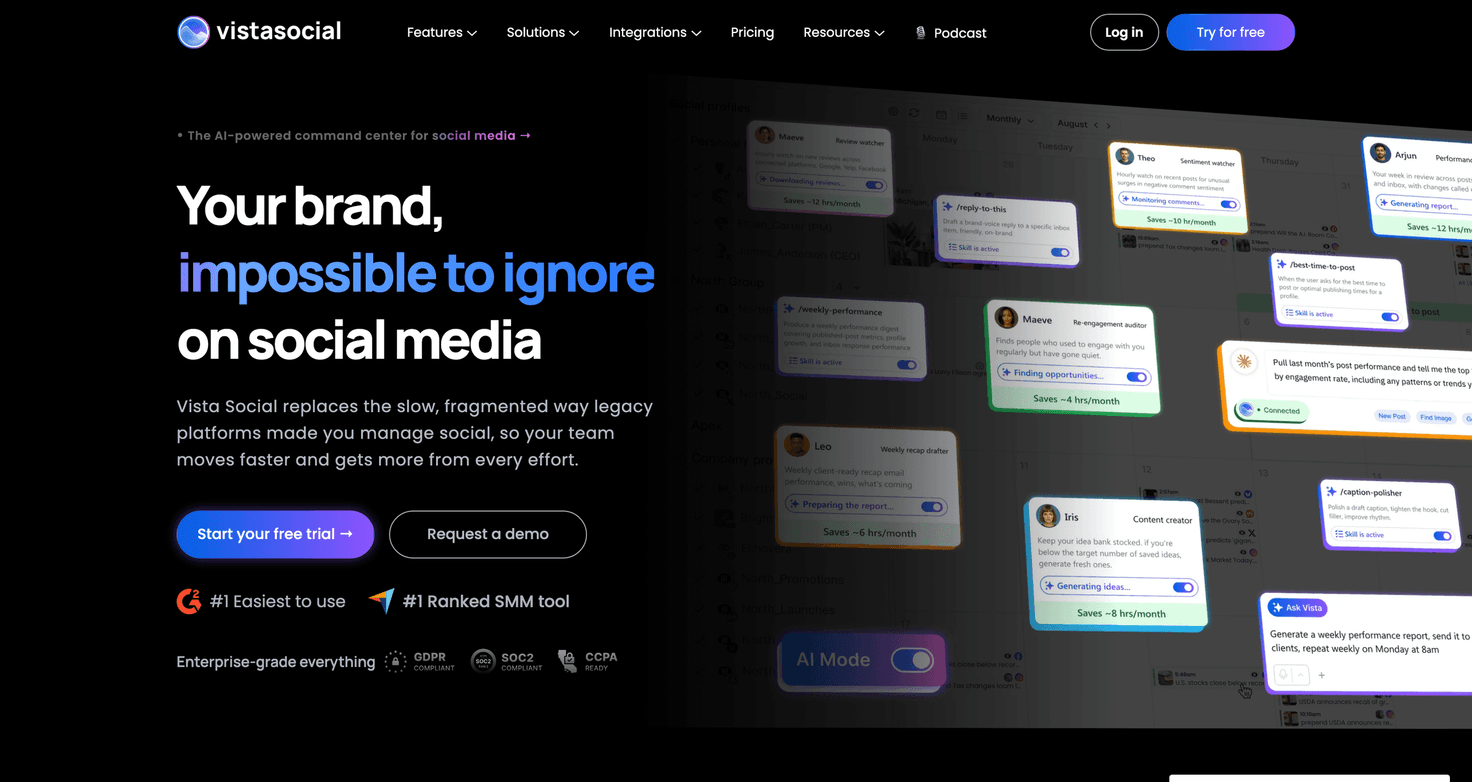
Vista Social brings publishing, an inbox, reviews and reporting into one platform. It is worth considering if your team handles both content and community management. Our Vista Social alternative comparison explores the differences.
Pros
- Publishing and community management in the same workspace
- Professional includes 15 profiles and 2 users
- Review management and link-in-bio tools alongside scheduling
Cons
- $99/month is a substantial starting cost for a solo creator
- X publishing is a separate $29/month add-on
- Broader social and web listening costs extra
Pricing: Vista Social Professional is $99/month, or $950/year, with a 14-day trial. The current pricing page does not list a permanent free publishing plan.
Pick something else if: you need a free scheduler or only manage a handful of accounts.
How to choose a social media scheduling tool
Four questions cut through most of the noise:
- Who needs to approve content? Test the entire review process, including what the client sees, whether they need an account, and whether approval is required before publishing. Check which paid tier includes it.
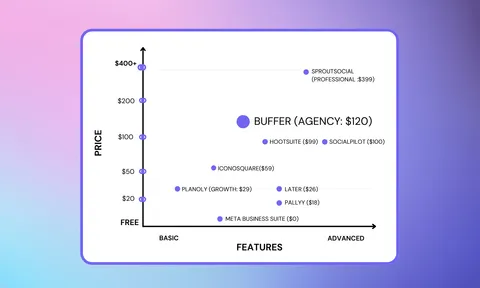
- What will your actual setup cost? Count brands, profiles and users, then add reporting or listening fees. Pallyy bundles social sets and users; Buffer charges by channel; Planable charges by workspace. Entry prices alone are not a fair comparison.
- Which networks and formats matter? Check your exact account types, Reels, Stories, carousels, tagging and audio requirements. Network support does not mean every format publishes automatically.
- What else needs to happen in the tool? An inbox, reports and listening are different features. For example, Pallyy has an inbox and analytics, but does not offer broad social listening.
Shortlist two tools and test a week of content, including a client approval and a report if you need them. Use drafts or separate test posts so you do not accidentally publish the same content twice.
Which tool should you try first?
For client scheduling and approvals, start with Pallyy. For a solo posting queue, try Buffer. For visual planning, consider Later; for a complex sign-off chain, look at Planable. Sprout Social and Hootsuite are worth evaluating when reporting, customer care or enterprise requirements justify the budget.
Social media scheduling tools FAQ
What is the best free social media scheduler?
Buffer is a useful starting point for one person: its free plan supports three channels and ten queued posts per channel. Pallyy offers 15 image posts per month, while Metricool supports one brand and 20 posts per month, excluding LinkedIn and X. Choose based on your networks and post formats. Planable's 50 free posts are a one-time trial allowance.
What is the best social media scheduler for agencies?
Pallyy suits agencies that want shared calendars and no-login client approvals, with 10 social sets and 3 users included on Agency. Planable is worth considering for complex review workflows, Sendible for white labelling, and SocialPilot for bulk scheduling. Compare the tier that includes your required features, not just the starting price.
Can these tools post automatically?
These tools offer automatic publishing for supported networks and post types. Availability depends on the account type, format and features in the post. Some posts still need a notification and a manual publishing step, so test your usual formats during the trial.
Which platforms can I schedule to?
Instagram, Facebook and LinkedIn are widely supported, but coverage of X, TikTok, Pinterest, YouTube, Google Business Profile, Threads and Bluesky varies by tool and plan. Later does not currently list X, and Metricool and Vista Social charge extra for X access. Check publishing support separately from analytics and inbox support.
Is Hootsuite still free?
Hootsuite no longer offers a permanent free plan. It offers a 30-day trial, and Standard starts at $99 per user per month billed annually. Buffer, Pallyy and Metricool have ongoing free plans with usage limits.
Do I need a scheduler if I only post a few times a week?
A scheduler can help at low volume if batching content saves you time or you need to publish while you are unavailable. If you only use one network and do not need approvals or reports, try that network's own scheduling tools before paying for a separate service.